
Fast vs. Thorough Cleaning: Why Two-Person Teams Deliver Both Without Compromising Quality
Fast vs. thorough cleaning: why two-person teams deliver both without compromising quality. See why we use a zone strategy to prevent fatigue this fall.
The Myth of the Slow, Meticulous Cleaner
The debate over fast vs. thorough cleaning: why two-person teams deliver both without compromising quality often comes down to understanding how professional systems actually work. In our experience servicing homes across Denver, we see that most homeowners harbor a deeply rooted assumption that speed naturally results in sloppy work. If a solo cleaner takes five hours to scrub your home, the logic goes, they must be highly meticulous. If a crew finishes the same house in half the time, they must be rushing through the job, cutting corners, and ignoring the details.
This assumption becomes especially stressful during the September fall-prep and transition to indoor living. As you prepare to seal up your house for the cooler weather, meticulous dust removal and allergen control become non-negotiable priorities. You need every baseboard wiped, every ceiling fan dusted, and every corner addressed before the heating system kicks on. This leaves you facing a difficult decision: do you hire a solo house cleaner who takes all day but risks fatigue and missed spots, or do you trust a synchronized cleaning crew to get the job done efficiently?
The reality is that professional speed is a byproduct of efficient, engineered systems, not rushing. A two-person team operates on a fundamentally different structural approach than a solo cleaner. By dividing labor, eliminating redundant movements, and focusing on specialized tasks, our coordinated crews achieve a higher standard of clean in a fraction of the time. If you are exploring house cleaning services to maintain your home, understanding the mechanics behind this speed will completely change how you view professional home care.
The Psychology Behind the "Slow Equals Good" Assumption
It is easy to equate time spent with value delivered. When you watch someone physically laboring in your home for an entire afternoon, it feels like you are getting your money's worth. However, this perspective ignores the biological realities of sustained physical labor. Cleaning a house is an intense cardiovascular and muscular workout. Bending, reaching, scrubbing, and carrying heavy equipment takes a significant physical toll.
When a solo cleaner works slowly, it is rarely because they are spending extra time perfecting the shine on your fixtures. More often than not, our team recognizes that they are working slowly because they are pacing themselves to survive a grueling four-to-five-hour shift. The slow pace is a survival mechanism, not a mark of superior attention to detail. Once you separate the concept of "time on site" from "quality of work," the advantages of a synchronized team become undeniable.
The Physiology of Cleaner Fatigue in Solo Jobs
To understand why a solo cleaner struggles to maintain quality over a long appointment, you have to look at the science of physical labor. The International Sanitary Supply Association (ISSA) sets the benchmark time and motion standards for the professional cleaning industry. According to ergonomic studies and ISSA standards, continuous physical cleaning tasks result in heavily diminished efficiency and thoroughness after prolonged periods.
The problem: A solo cleaner starts their shift with high energy. During the first two hours, they are meticulous. They scrub the master shower with vigor, they get on their hands and knees to detail the kitchen baseboards, and they carefully move counter appliances to wipe underneath them. However, as they enter hour three, four, and five, the "fatigue curve" sets in. Muscle exhaustion and mental fatigue take over.
The cause: The human body is simply not designed to perform high-intensity, repetitive physical labor with perfect attention to detail for five hours straight without a drop in performance. As fatigue sets in, blind spots develop. The high-dusting gets skipped because reaching up requires too much shoulder effort. The baseboards in the guest bedroom are ignored because bending down hurts the lower back. The floors might get a quick mop, but the corners are left untouched.
The solution: Dividing the labor resets the fatigue curve entirely. When two people tackle a home, the total time on site is cut in half, meaning the entire job is completed within the peak energy window of both professionals. Neither person reaches the point of exhaustion where corners get cut. We consistently hear from local homeowners who found that their house simply wasn't getting fully clean during long, exhausting solo shifts. After switching to our coordinated team approach, they consistently come home to a sparkling clean house, noting that the fresh crew was even great with their dog. This sustained energy is exactly why routine maintenance cleaning performed by a team yields vastly superior and more consistent results over time.
Synchronized Zone Strategy: The Mechanics of Speed
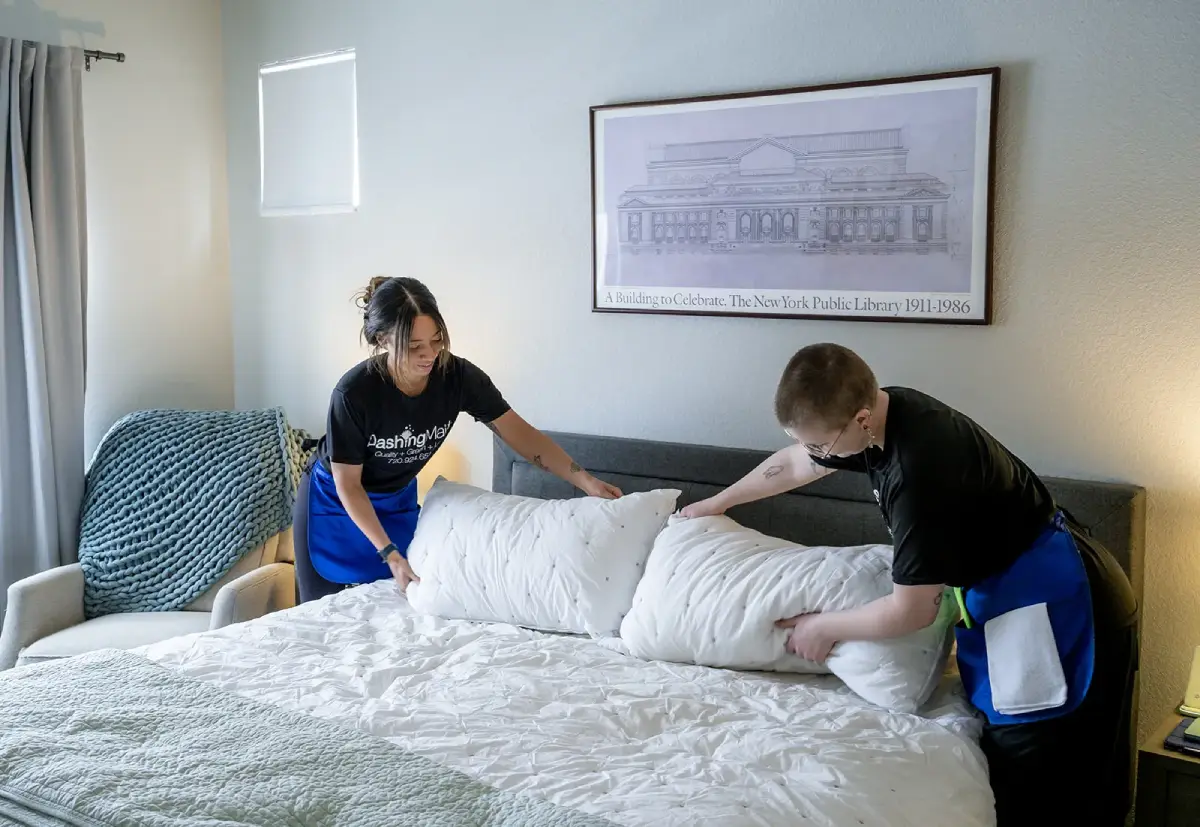
If speed doesn't come from rushing, where does it come from? The answer lies in the synchronized two-person zone strategy. This is an engineered process we utilize to provide built-in accountability and faster completion times without sacrificing a single ounce of quality.
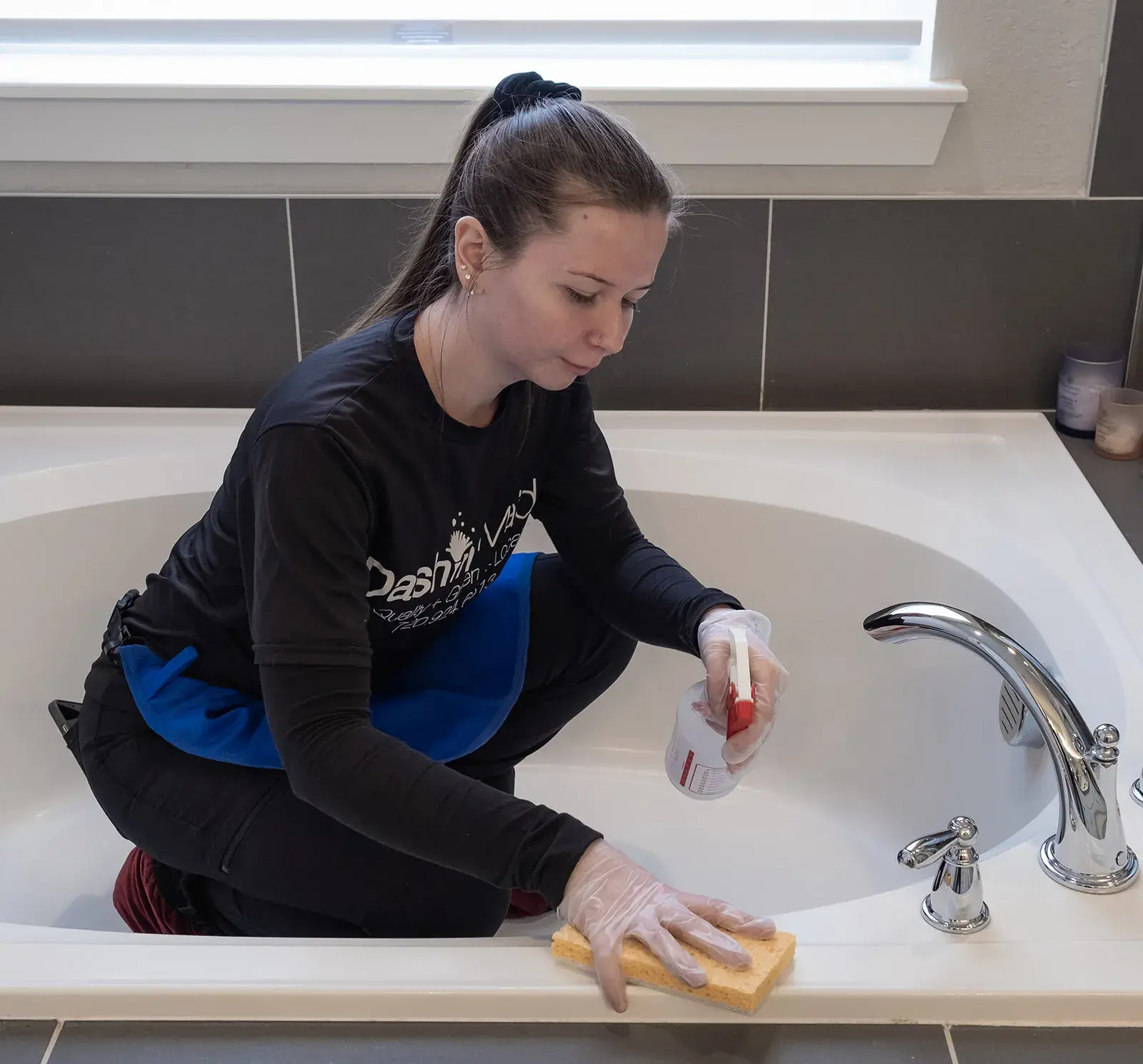
In a professional zone strategy, the home is divided into "wet" and "dry" areas. One team member takes ownership of the wet zones—primarily the bathrooms and the kitchen. These areas require heavy scrubbing, specialized degreasers, sanitizing agents, and specific microfiber cloths. The second team member takes ownership of the dry zones—the living rooms, bedrooms, hallways, and home offices. This role focuses heavily on high-dusting, surface polishing, tidying, and vacuuming.
By specializing in a specific zone, each team member eliminates the massive amount of wasted time associated with "tool switching." A solo cleaner constantly has to stop, put away their glass cleaner, grab their dusting wand, walk to a different room, realize they forgot their floor cleaner, and walk back. A zone specialist carries exactly what they need for their specific environment and stays in their flow state. Furthermore, keeping wet and dry tools strictly separated prevents the cross-contamination of moving a damp bathroom cloth into a dry, dusty bedroom environment.
If you want to understand how our professional cleaning teams at Dashing Maids achieve such remarkable efficiency, look at the direct mechanical differences in how the labor is executed:
| Operational Metric | Solo Cleaner Approach | Two-Person Zone Strategy |
|---|---|---|
| Time on Site | 4 to 5 hours of continuous labor | 2 to 2.5 hours of simultaneous work |
| Fatigue Level | High exhaustion by the end of the job | Sustained peak energy from start to finish |
| Task Transition | Constant stopping to switch tools and supplies | Dedicated tool sets for uninterrupted workflow |
| Cross-Contamination Risk | High risk of mixing wet and dry cleaning tools | Zero risk due to strict wet/dry zone separation |
| Detail Retention | Blind spots develop in the final rooms cleaned | Meticulous attention maintained across all rooms |


Tackling Unique Dust Challenges Without Missing a Spot
The advantages of a highly energized, specialized cleaning team become even more apparent when you factor in regional environmental challenges. In our years working in the Denver area, we've seen firsthand how the dry air and high altitude exacerbate dust accumulation in ways that homeowners in more humid climates simply do not experience. The semi-arid environment creates a massive amount of static electricity inside the home.
This static electricity acts like a magnet, causing fine, powdery dust to cling stubbornly to walls, baseboards, ceiling fan blades, and wooden furniture. Removing static-cling dust is not as simple as lightly running a feather duster over a shelf. It requires sustained physical effort, applying pressure with a damp microfiber cloth to break the static bond and physically trap the particulate matter.
Why Dedicated Dry-Zone Cleaners Win
For a fatigued solo cleaner, applying that kind of pressure to every dusty surface in a 2,500-square-foot house is nearly impossible. By the time they reach the master bedroom, they are likely just lightly swiping at the dust, leaving a thin film behind that immediately attracts more particles. This is a massive problem for Denver metro area homes, especially as residents prepare to seal their windows and rely on indoor heating systems for the winter.
When you utilize a two-person strategy, the "dry zone" specialist dedicates their full, uncompromised energy to meticulous dusting and allergen removal. Because they are not exhausting themselves scrubbing soap scum out of the master shower, they have the stamina to apply the necessary pressure to eradicate static dust from your living spaces. This targeted, high-energy approach is exactly what makes our deluxe deep cleaning so effective at improving indoor air quality before the heavy heating season begins.
Built-In Accountability and Quality Control
Beyond the physical advantages of shared labor, having two professionals on site provides psychological and practical benefits that a solo cleaner simply cannot match. The most significant of these benefits is peer accountability. When humans work alone for long periods, standards naturally begin to slip. It is easy to convince yourself that a slightly smudged mirror "looks fine" when no one else is around to see it.
A pattern we see often is that when two professionals work in tandem, they naturally uphold each other's standards. They represent a shared brand, and neither wants to be the weak link that causes a homeowner complaint. This built-in quality control ensures that the home is left smelling fresh and feeling genuinely clean, rather than just superficially tidied up. One of our recent clients observed that their home was handled in a friendly, fast, yet incredibly thorough manner by our coordinated crew, leaving the house feeling and smelling genuinely clean with a lasting freshness that a fatigued solo worker could not achieve.
The "Second Set of Eyes" Protocol
The physical layout of our zone strategy also creates natural checkpoints. Here is how a team structure naturally catches errors before they happen:
- The Transition Zones: Where wet and dry areas meet (such as the hallway leading into a bathroom), both cleaners cross paths. This provides a natural "second set of eyes" on high-traffic areas.
- The Final Walkthrough: Because the team finishes simultaneously, they can walk through the home together, inspecting each other's zones for missed spots before packing up their equipment.
- Adaptability to Requests: If a homeowner has a specific, time-consuming request (like detailing the inside of the refrigerator), one team member can tackle that custom task while the other continues the standard maintenance routine, ensuring the job stays on schedule.
- Equipment Checks: Team members verify that all supplies are packed and no damp cloths or bottles are accidentally left behind on the client's furniture.
Risk Management and Professional Standards
Finally, we always emphasize the operational safety and liability benefits of hiring a coordinated professional team over an independent solo cleaner. When you hire an individual off a community message board, you assume a significant amount of risk. If they injure themselves while trying to move a heavy sofa to vacuum underneath it, or if they accidentally knock over an expensive vase because they are rushing to finish a long shift, the liability often falls on the homeowner.
Safety in Numbers: Moving Furniture and Reaching High Places
A professional two-person team mitigates these risks entirely. Standardized training ensures that both team members follow the exact same safety and quality protocols. When a light piece of furniture needs to be moved to clean behind it, two people can lift it safely without risking personal injury or scratching your hardwood floors. When a high ceiling fan needs to be reached, one person can stabilize the step stool while the other performs the dusting.
Furthermore, professional teams operate under strict corporate guidelines regarding property protection. They have the training to know which chemicals are safe for natural stone and which are not. This systematic approach, combined with the fact that our professional crews are fully bonded and insured, provides a level of peace of mind that goes far beyond a clean living room. For a deeper dive into how this protects you as a homeowner, understanding cleaning liability is an essential step in choosing the right service provider.
Answers to Common Questions About Cleaning Efficiency
Is it better to hire a solo cleaner or a team?
We highly recommend hiring a team for both efficiency and quality control. A solo cleaner will suffer from physical fatigue during a long shift, leading to missed details and cut corners in the final hours of the job. A two-person team divides the labor, completing the work within their peak energy window while providing built-in peer accountability. This ensures your home receives meticulous attention from start to finish.
How do professional cleaners clean so fast?
Professional speed comes from systematic engineering, not rushing or skipping tasks. Our teams use a choreographed routine, specialized commercial-grade tools, and strict zone divisions to eliminate wasted movement. By preventing the constant stopping and switching of supplies that plagues amateur cleaners, professionals can cut the time on site in half while actually increasing the thoroughness of the work.
What is a zone cleaning strategy?
A zone cleaning strategy is a method where a home is divided into specific areas—usually "wet" zones (kitchens and bathrooms) and "dry" zones (living spaces and bedrooms). Each cleaner takes ownership of a specific zone, carrying only the tools required for that environment. This prevents cross-contamination between bathrooms and bedrooms and allows each cleaner to maintain a highly efficient flow state.
How long should it take to clean a 2000 sq ft house?
For a standard maintenance clean, a solo cleaner typically requires 4 to 5 hours to properly service a 2,000-square-foot home. However, a synchronized two-person team can complete the exact same scope of work in roughly 2 to 2.5 hours. Deep cleans or initial visits will take longer, but the mathematical advantage of dividing the labor remains exactly the same.
Does a faster cleaning time mean lower quality?
No, a faster time only means lower quality if a solo cleaner is actively rushing to finish early. When the reduced time is the result of a two-person team working simultaneously in different zones, the quality actually improves. The home is cleaned faster simply because twice the amount of labor is being applied per minute, preventing the fatigue that causes slow cleaners to make mistakes.
How does a two-person team prevent cross-contamination?
A two-person team prevents cross-contamination through strict role division and dedicated tool sets. The team member assigned to the wet zones uses specific sanitizers, degreasers, and color-coded cloths designed exclusively for bathrooms and kitchens. The dry zone specialist uses completely different dusters and polishes for the living areas. Because they do not share equipment, bathroom bacteria is never accidentally transferred to your bedroom nightstand.
Experience the Efficiency of a Synchronized Cleaning Team
The myth that a slow cleaner is a better cleaner simply does not hold up against the realities of human fatigue and time-motion science. By dividing tasks into specialized zones, a synchronized two-person team actively prevents exhaustion, creates natural peer accountability, and ensures meticulous results in half the time. This engineered approach is especially critical when dealing with stubborn, static-cling dust during the dry fall transition.
You no longer have to compromise between getting your house cleaned quickly and getting it cleaned properly. Stop settling for long, disruptive appointments that end with skipped baseboards and lingering allergens. A logical, systematic breakdown of the two-person zone strategy proves that dividing tasks prevents fatigue, creates accountability, and ensures meticulous results in less time. Reach out to our team at Dashing Maids today to discuss your home's specific maintenance needs and experience the difference a professional team can make.
Ready to come home to calm?
Get a free, no-obligation quote and see why Denver trusts Dashing Maids for eco-friendly, no-contract cleaning.
Call or request a quote · Mon–Fri: 9:00 AM – 5:00 PM · Denver, CO