


Do I Need to Pre-Clean Before the Maids Arrive?
Many homeowners feel anxious before a cleaning service arrives, unsure if they should scrub surfaces first. Find out exactly what clutter to pick up and what messes to leave.

If you want to know how regular cleaning reduces allergy symptoms, the short answer is that physical extraction stops micro-particles from settling and recirculating in your breathing zone.
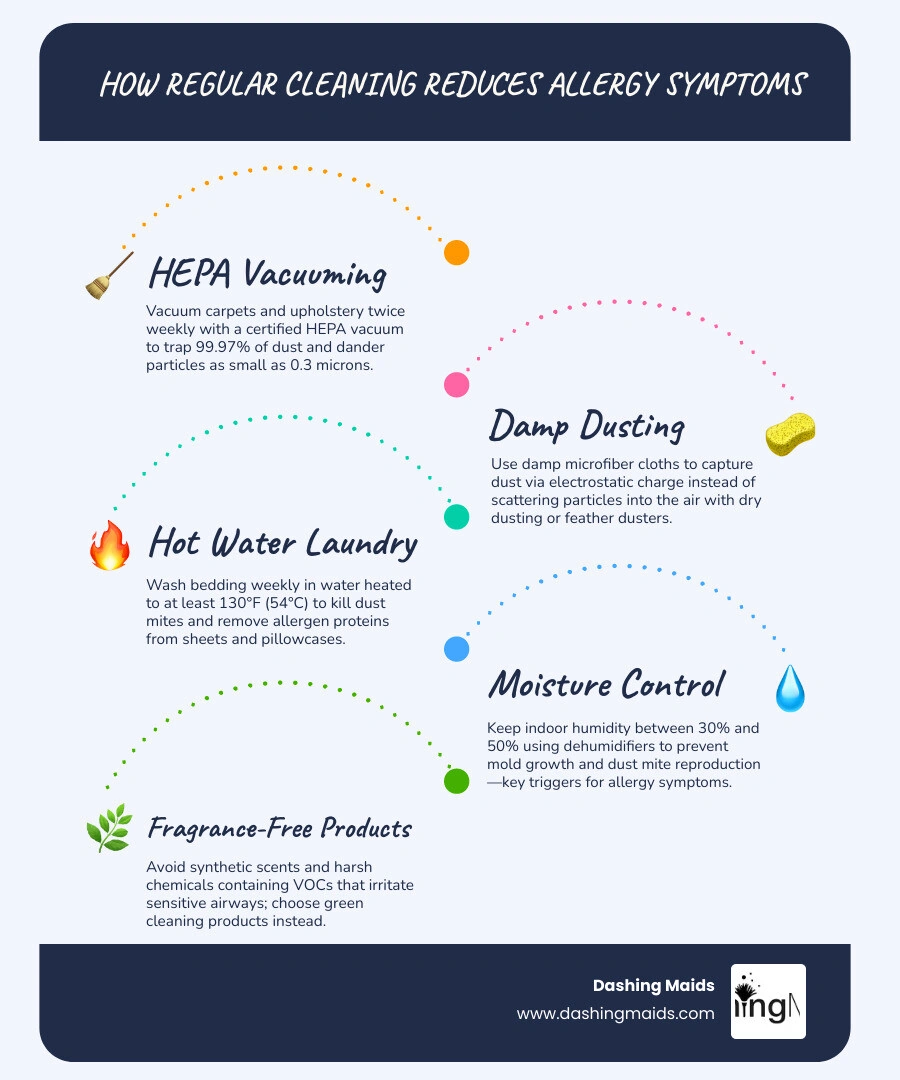
To keep allergy triggers at bay, follow this 5-step cleaning approach:
If you struggle with seasonal sneezes, itchy eyes, or asthma flares, you are likely looking for relief and wondering how to keep your home healthy. In a dry, windy environment like ours, dust, pet dander, and outdoor pollen constantly blow indoors and settle deep into carpets and furniture. This buildup turns your peaceful home into a constant trigger zone for respiratory issues. Finding a reliable, eco-friendly house cleaning service in Denver, CO is often the first step to reclaiming your comfort. Keeping these microscopic irritants at bay requires a consistent, strategic approach rather than occasional deep sweeps.
To start breathing easier, explore our comprehensive Denver house cleaning options or get a free cleaning quote today.
As the founder of Dashing Maids, I have spent over a decade helping Denver families create healthier, cleaner homes. Over the years, I have developed deep expertise in how regular cleaning reduces allergy symptoms by designing eco-friendly routines that eliminate dust, dander, and mold without relying on harsh chemical irritants.
How regular cleaning reduces allergy symptoms terms you need:
To effectively clean your home for allergy relief, we first need to understand exactly what we are fighting. Microscopic irritants hide in plain sight on virtually every surface of our living spaces. According to national health statistics, 8 out of 10 people in the United States are regularly exposed to dust mites, while 6 out of 10 are exposed to cat or dog dander.
These tiny particles trigger an immune response when inhaled or touched, leading to the classic symptoms of allergic rhinitis: sneezing, nasal congestion, watery eyes, and coughing. Understanding the profiles of these common offenders is the first step toward reclaiming your indoor air quality.
For a deeper dive into these microscopic invaders, read our detailed guide on Common Indoor Allergens and learn more about How Dust and Allergens Build Up in Your Home.
Many people try to manage their allergies by turning on standalone air purifiers or spraying chemical air fresheners. However, the physical reality of indoor allergens makes these methods incomplete on their own. There are always significantly more allergens settled on household surfaces—such as carpets, countertops, baseboards, and bedding—than floating in the active breathing air.
Whenever we walk across a carpet, sit on a couch, or ruffle a blanket, we launch these settled particles back into the air. This physical dynamic is why surface-level "source removal" is the absolute gold standard for allergy management.
When we physically extract dust, dander, and pollen from our living spaces, we prevent them from accumulating to the threshold levels that trigger our immune systems. Constant exposure to indoor allergens keeps our bodies in a state of low-level, chronic inflammation. By systematically removing these triggers, we give our immune systems a much-needed break, allowing our respiratory tracts to heal and reducing our vulnerability to secondary infections.
Scientific research shows that indoor allergen levels typically peak around day 10 to 14 after a thorough cleaning session. This means that if you only clean your home once a month, you are spending at least two weeks living in a high-allergen environment where symptoms are guaranteed to flare. Maintaining a consistent cleaning routine keeps the allergen load safely below your personal symptom threshold.
To learn more about the biological connection between home hygiene and lung health, read about How a Clean Home Supports Respiratory Health.
Creating an allergy-safe sanctuary does not require a complete lifestyle overhaul. By focusing on smart, targeted cleaning techniques and utilizing eco-friendly, non-toxic products, you can systematically lower allergen counts in every room. Here is our proven 5-step blueprint to allergy-proofing your home.
The tools you use to clean make all the difference. Standard household vacuums and traditional cleaning tools often do more harm than good. A standard vacuum without a specialized filter acts as an aerosolizer; it sucks up heavy dirt but exhausts fine microscopic allergens—like dust mite waste and pet dander—straight back into your breathing zone.
To stop this cycle, you must use a vacuum equipped with a certified HEPA (High-Efficiency Particulate Air) filter. A true HEPA filter is rated to trap 99.97% of microscopic particles down to 0.3 microns in size. This ensures that once the allergens are pulled from your carpets and upholstery, they remain locked inside the canister.
Additionally, we must ditch traditional feather dusters entirely. Feather dusters do not clean; they simply kick dust particles into the air, allowing them to settle elsewhere. Instead, use high-quality microfiber cloths. Microfiber features a unique polyester and nylon weave that carries a natural electrostatic charge. This charge acts like a magnet, attracting and locking in dust particles.
Always practice "damp dusting" by lightly misting your microfiber cloth with water or an eco-friendly, fragrance-free cleaner before wiping down surfaces. This completely prevents dust from becoming airborne during the cleaning process.
Discover more details on selecting safe tools in our guide on Cleaning Practices That Improve the Air You Breathe.
Every room in your house has specific "allergen nests" that require specialized cleaning techniques. To maximize the health benefits of your cleaning routine, focus your efforts on these high-impact zones:
We spend approximately one-third of our lives in the bedroom. Because our faces are pressed against pillows and mattresses for hours at a time, bedroom allergen control is critical for preventing morning congestion and sneezing.
Bathrooms are primary breeding grounds for mold and mildew due to high humidity and standing water.
Kitchens attract cockroaches and mice, both of which leave behind potent allergenic residues.
Stop outdoor allergens before they ever cross your threshold.
Because indoor allergen levels naturally build back up and peak around day 10 to 14 after a thorough cleaning, consistency is much more important than occasional, exhausting deep cleans. A predictable cleaning schedule keeps allergen counts low enough to prevent your immune system from going into overdrive.
To help you stay on track, we have created this structured cleaning schedule designed to maintain low allergen levels year-round:
| Cleaning Frequency | Targeted Tasks | Allergy-Proofing Benefit |
|---|---|---|
| Daily | Wipe kitchen counters; sweep hard floors; 15-minute mattress vacuuming (for severe sufferers); nightly 5-minute clutter cleanup. | Prevents pest attraction, reduces immediate dust accumulation, and stops allergens from settling. |
| Weekly | Wash all bedding at 130°F+; vacuum carpets and upholstery with a HEPA vacuum; damp-dust all surfaces; clean bathroom showers/tubs. | Kills dust mites, extracts settled dander, and prevents mold spores from multiplying. |
| Monthly | Wash pillows and washable curtains; vacuum baseboards, vents, and behind furniture; replace HVAC air filters. | Cleans overlooked dust collectors and prevents HVAC systems from recirculating allergens. |
| Seasonally | Professional deep carpet extraction; deep clean air ducts; wash window screens; pull out heavy appliances to clean narrow gaps. | Extracts deeply embedded allergens from soft fibers and eliminates hidden mold/dust mite incubators. |
Physical surface cleaning must be paired with smart environmental controls to keep indoor air clean and breathable.
For more tips on navigating local air quality challenges, read about How Dry Air Creates More Dust in Colorado Homes.
Sometimes, well-intentioned cleaning habits can actually make allergy symptoms worse. Avoid these common mistakes to protect your respiratory health:
You should wash your sheets, pillowcases, and blankets at least once a week. To successfully kill dust mites and remove their allergenic waste, the wash water must reach a temperature of at least 130°F (54°C). If your water heater is set lower for safety, tumble-dry your bedding on a high-heat cycle for at least 20 minutes to achieve the same result.
While it is impossible to completely eliminate pet dander as long as a pet lives in the home, regular cleaning can reduce dander levels significantly. Vacuuming carpets and upholstery twice a week with a HEPA vacuum, washing pet beds weekly, and keeping pets strictly out of bedrooms will keep dander levels low enough for most mild-to-moderate allergy sufferers to live comfortably with their furry companions.
Cleaning physically disturbs settled dust, mold spores, and pet dander, temporarily launching these microscopic particles into the air. To prevent post-cleaning flare-ups, always wear a protective mask while cleaning, use damp dusting methods, vacuum only with a certified HEPA vacuum, and ventilate the room by opening windows for 15 to 30 minutes immediately after you finish.
Taking control of your indoor air quality does not have to be an overwhelming chore. By understanding how regular cleaning reduces allergy symptoms and implementing these five simple steps, you can transform your home into a breathable, healthy sanctuary.
However, we understand that maintaining a strict, multi-step allergy-cleaning routine can be incredibly time-consuming for busy families and working professionals. That is where we can help.
Dashing Maids is a premier, woman-owned, and eco-friendly home cleaning service serving Denver, CO and surrounding communities, including Arvada, Broomfield, Central Park, Golden, Lakewood, Littleton, and Wheat Ridge. With over 10 years of experience and a 4.8-star rating from more than 3,000 homes served, we specialize in thorough, reliable green cleaning.
We use only non-toxic, fragrance-free products and high-efficiency HEPA filtration vacuums to physically extract allergens without introducing harsh chemical irritants into your home. With our flexible, contract-free recurring cleaning plans, you can enjoy peace of mind and a spotless, healthy home.
Read more about Why a Professionally Cleaned Home Is a Healthier Home, or take the first step toward allergy relief today by booking a professional deep cleaning in Denver, CO. Contact Dashing Maids today to get your free quote!

I was extremely pleased with Ashley’s team and they left my house extra-sparkling, making me look good for my in-laws’ visit. All traces of puppy fur and hard-to-remove gunk removed, and the house smelled clean, like lavender (not harsh chemicals). This is thorough, professional, fairly priced, and courteous service. All the stars!”
“We are very pleased with the service we received with Dashing Maids. Their communication and customer service is superb! Ashley is professional and has great attention to detail. She took the time to take notes on all the areas in our house that I wanted to have cleaned during our first walk through, which I really appreciated. In the past, I’ve done walk throughs with other cleaning companies, explained what I wanted cleaned, they nod “yes” and then didn’t follow through. When Dashing Maids came to clean on our scheduled date, they were very efficient. Everything looked great when they were finished and I’m looking forward to having Dashing Maids return on a regular basis.”
“I have never had a cleaning service, but considered it often. Dashing Maids put a flyer on my door which intrigued me enough to call them. I was impressed with their initiative and enthusiasm that I hired them after our initial meeting. Now every other week I get to come home to a wonderfully clean house with their charming additions that make me smile. I’m not sure they are trying to turn my “black thumb” into a greenish one, but I haven’t killed the lucky bamboo they left as a surprise yet. I’d fully endorse them as a cleaning, Dashing Maids service.”
“It’s so nice to come home to a sparkling clean house! I’ve worked with other cleaning companies in the past and Dashing Maids always provides a more thorough clean than I’ve found with other companies for a very reasonable price. Plus, they’re great with my dog and don’t mind that he’s at home when they come to clean. I highly recommend Dashing Maids!”
“There is no one that cleans our house as well as Katie does! She is meticulous and genuinely loves to clean, and it absolutely shows. We love it when it is our cleaning day. I could not be happier with the services provided by her and the Dashing Maids company. They are responsive, timely, and have overall been a pleasure to work with. I would recommend them to anyone looking for a reliable cleaning company.”
“I have been using Dashing Maids for several years now, and appreciate the communication and consistency with which our home is cleaned. The cleaner that always treats our home as if it were hers is Katie. Thanks Katie for your hard work!”
“Hannah G was great! She even left a nice note on my countertop that said, “Have a great weekend!” I love personal touches like that.”
“Thank you Talon! It was great to walk into my office today to have it sparkly clean and ready for a week of patients!”
"We have been dashing maids customers for a couple of years now and the service is always impeccable. Most recently our cleaning team has included Katie and Hannah, and I always get excited when I see them arrive. I know my house will be clean and I’ll get the pleasure of their company while they clean it. They do a great job and give me such peace of mind!”
“Ashley and her crew are the best house cleaning service I have ever employed. So friendly and so fast, yet so thorough. My house feels and smells so clean, and that freshness lasts. Would highly recommend to all my friends."
We've been fortunate to have Dashing Maids clean our home for the past several years. Ashley and her entire team have been great to work with. We'd recommend them without reservation. Most recently, Tori and Carol cleaned our home with detail and care.
We really appreciate our cleaner,
Lily! She does more than just a quick “once over”. She recently found a class ring that had been missing for ages- thank you for a job well done! Dashing Maids delivers thoroughgoing service every time
Such a positive experience the whole time they were in my home. And the results are amazing. Very happy with the service and the staff. I knew what to expect but the outcomes exceeded my expectations. Lily, Mikayla and Alicia did so great!
We really appreciate our cleaner,
Lily! She does more than just a quick “once over”. She recently found a class ring that had been missing for ages- thank you for a job well done! Dashing Maids delivers thoroughgoing service every time





.svg)


.svg)


