


_compressed.jpeg)
Guide
Why Indoor Air Quality Is the Hidden Key to Respiratory Health at Home
How a clean home supports respiratory health is something more Denver families are asking about — and for good reason. Here is a quick answer:
A clean home reduces respiratory health risks by:
- Removing dust, mold spores, pet dander, and pest allergens that trigger asthma and allergy flares
- Eliminating built-up PM2.5 particles and volatile organic compounds (VOCs) that damage lung function over time
- Lowering the concentration of airborne viruses and bacteria that spread more easily in poorly maintained indoor spaces
- Controlling humidity levels that allow dust mites and mold to thrive
- Reducing the need for harsh chemical sprays that can themselves harm lung tissue with repeated exposure
Most people think of air pollution as an outdoor problem. But research tells a different story. Indoor air can actually be more polluted than the air outside, and because the average person spends more than 80% of their time indoors, that exposure adds up fast. In fact, indoor air pollution is linked to 3.2 million premature deaths worldwide every year — a number that reflects just how serious the air inside our homes can be for long-term lung health.
What makes this especially worth paying attention to is that many of the biggest threats are invisible. You cannot see a dust mite. You cannot smell formaldehyde off-gassing from a cleaning spray. And you may not notice the slow, cumulative effect that poor indoor air quality is having on your breathing — until it becomes a real problem.
I'm Ashley Matuska Kidder, founder of Dashing Maids, and after more than a decade helping Denver-area families create cleaner, healthier homes using eco-friendly, non-toxic methods, I have seen how a clean home supports respiratory health in ways that go far beyond a tidy appearance. In the sections below, I will walk you through exactly what the science says — and what you can actually do about it.
The Science of Indoor Air Quality and Lung Function
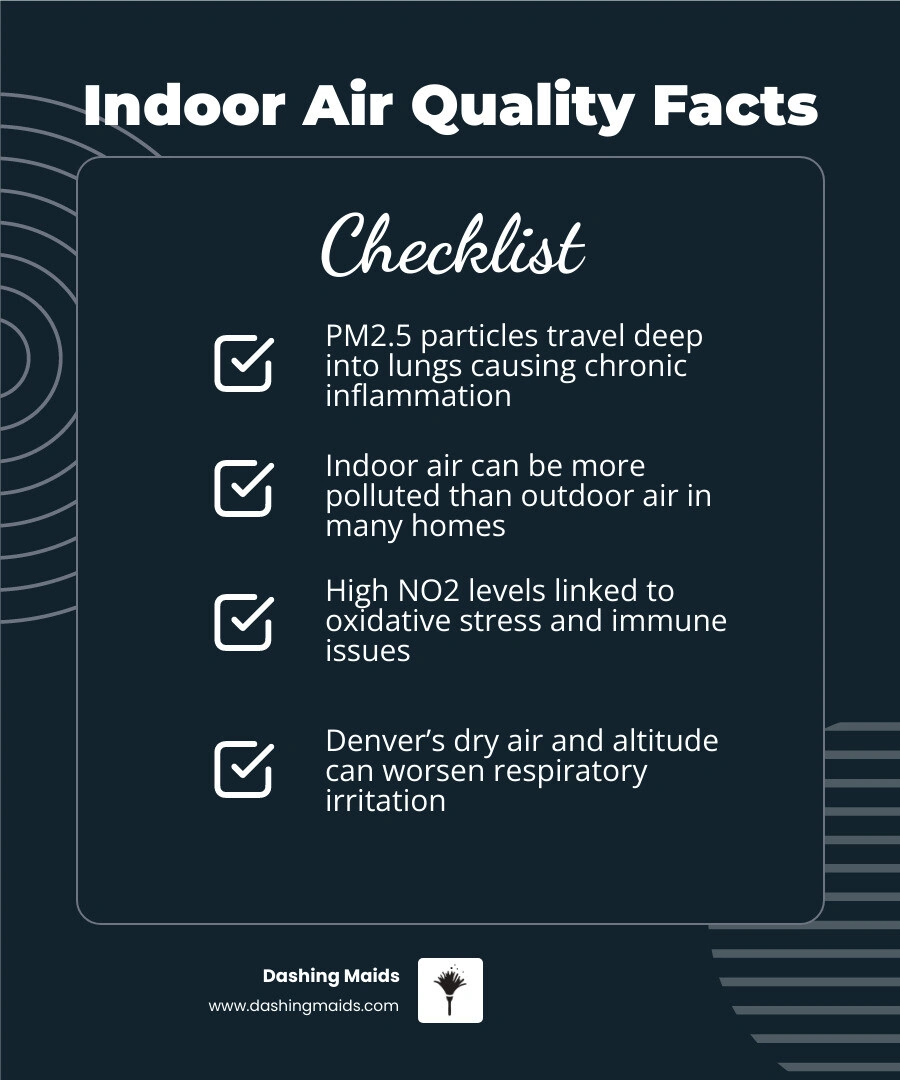
To understand how a clean home supports respiratory health, we first have to look at what is actually floating in our air. We often talk about "dust," but dust is a complex cocktail of skin cells, clothing fibers, microscopic plastic, pollen, and outdoor soil. When these particles are small enough — specifically those under 2.5 micrometers, known as PM2.5 — they don't just sit in your nose or throat. They travel deep into the smallest reaches of your lungs and can even enter your bloodstream.
Recent studies have shown that high levels of indoor PM2.5 and nitrogen dioxide (NO2) are directly linked to oxidative stress and immune dysregulation. This means your body’s natural defenses are constantly "on alert," leading to chronic inflammation. For residents in the Denver metro area, this is compounded by our high altitude and dry air, which can already irritate the respiratory tract.
The impact of microscopic pollutants on chronic conditions
For the millions of people living with asthma or COPD (Chronic Obstructive Pulmonary Disease), the stakes are even higher. Indoor air quality is often the dominant source of cumulative pollutant exposure. When we don't maintain a clean environment, we allow Common Indoor Allergens to accumulate to dangerous levels.
The statistics are sobering. Long-term exposure to poor indoor air can lead to a measurable decline in FEV1 (the amount of air you can force out of your lungs in one second). In fact, research involving over 6,000 adults tracked over 20 years found that people who cleaned with harsh conventional products experienced a decline in lung function comparable to smoking 10 to 20 cigarettes a day. This is why we are so passionate about green cleaning; it isn't just about the environment "out there" — it's about the biological environment inside your chest.
How a Clean Home Supports Respiratory Health Through Source Control
In health and safety, there is a concept called the "Hierarchy of Controls." The most effective way to protect yourself is not to wear a mask or buy a fancy gadget; it is to eliminate the source of the problem. This is where professional-grade cleaning comes in.
When we talk about how a clean home supports respiratory health, we are talking about source control. If you remove the dust before it becomes airborne, you don't have to worry about breathing it in. We recommend using Cleaning Practices That Improve the Air You Breathe, such as damp dusting. Using a dry feather duster just launches particles back into the air. A damp microfiber cloth, however, traps and removes them entirely.
Why how a clean home supports respiratory health matters in Denver's climate
Our local environment in Arvada, Broomfield, and Wheat Ridge presents unique challenges. Because we live in an arid, high-desert climate, dust doesn't "settle" and stay put as easily as it does in humid climates. It stays light and airborne longer. Furthermore, our windy seasons often drive fine desert dust and pollen through even the smallest gaps in windows and doors.
Without a consistent cleaning routine, this "pollen infiltration" builds up in carpets and upholstery, turning your home into a reservoir for respiratory triggers. By maintaining a regular cleaning schedule, we can prevent these outdoor pollutants from becoming permanent indoor residents.
Eliminating the "cleaning-related lung damage" risk
One of the most startling research gaps people face is the misunderstanding of "clean." For decades, marketing has told us that "clean" smells like bleach or heavy floral perfumes. In reality, those scents are often Volatile Organic Compounds (VOCs) that can linger for months.
As we mentioned earlier, the lung function decline seen in women who performed regular cleaning with harsh chemicals was significant. Women cleaning at home experienced an additional loss of 3.6 ml/year in FEV1 compared to those who didn't. To protect your family, you should:
- Switch to fragrance-free or plant-based surfactants.
- Avoid aerosol sprays that create fine mists easily inhaled into the lungs.
- Use vinegar, baking soda, or Green Seal-certified products that don't contain known asthmagens (substances that cause asthma).
Engineering a Healthier Environment: HEPA and Ventilation
While cleaning surfaces is vital, we also have to address the air itself. This is the "engineering" part of the hierarchy. HEPA (High-Efficiency Particulate Air) filters are the gold standard here. A true HEPA filter is designed to trap 99.97% of particles as small as 0.3 microns.
In our experience serving homes in Lakewood and Central Park, we've seen that using the right equipment makes a massive difference. Traditional vacuums often have "leaky" exhausts that blow fine dust right back out the back. A vacuum with a sealed HEPA system ensures that once the dust is sucked up, it stays trapped.
| Feature | Standard Vacuuming | HEPA-Filtered Vacuuming |
|---|---|---|
| Particle Retention | Often leaks fine dust/allergens | Traps 99.97% of particles (0.3 microns) |
| Air Quality Impact | Can temporarily worsen air quality | Significantly improves air quality |
| Allergen Removal | Removes surface dirt only | Captures microscopic triggers |
| Exhaust Air | May contain "dusty" odors | Clean, filtered air exhaust |
To truly support respiratory health, experts recommend aiming for at least 5 air changes per hour (ACH). You can achieve this by using portable HEPA air cleaners in high-traffic rooms and ensuring your HVAC system uses pleated filters (changed every three months). We also suggest learning How to Maintain Clean Carpets and Upholstery because these fabrics act like giant air filters for your home, trapping particles until they can be professionally extracted.
Reducing airborne virus transmission indoors
Since the events of the early 2020s, we have all become more aware of how respiratory viruses spread. We now know that viruses don't just spread through large droplets but also through tiny aerosols that hang in the air like smoke.
A clean home supports respiratory health by ensuring that airflow is not blocked by clutter and that exhaust fans (in kitchens and bathrooms) are free of dust and functioning properly. When you have guests over, setting your HVAC fan to "on" instead of "auto" can keep the air moving through your filters constantly, reducing the concentration of any potential viral particles.
Practical Steps for Families with Asthma and COPD
If someone in your home has a chronic lung condition, cleaning isn't just a chore — it's a medical necessity. The goal is to create a "sanctuary" where the lungs can rest and recover from the pollutants encountered outdoors.
Humidity Control: The 30-50% Rule
Dust mites and mold are two of the biggest triggers for asthma. Both thrive in moisture. We recommend keeping your home's humidity between 30% and 50%. In Denver, we often struggle with air being too dry, but if you use a humidifier, be sure to clean it daily. Stagnant water in a humidifier can quickly become a breeding ground for mold and bacteria, which are then pumped directly into your breathing zone.
Bedding and Dust Mite Eradication
Dust mites live on human skin flakes and are most concentrated in bedding. To combat them:
- Wash all sheets and pillowcases weekly in water that is at least 130°F.
- Use zippered, allergen-proof covers on mattresses and pillows.
- If you have items that cannot be washed (like certain stuffed animals), placing them in the freezer overnight can kill the mites, though washing is still needed to remove the allergens they leave behind.
Understanding how a clean home supports respiratory health for seniors
In communities like Golden and Littleton, we serve many seniors who are managing COPD or age-related lung sensitivity. For this group, physical exertion can make cleaning difficult, yet they are the most vulnerable to the effects of poor air quality.
Adhering to a long-term cleaning plan has been shown to improve respiratory symptom scores and reduce the rate of moderate exacerbations. When seniors are freed from the "dust load" in their homes, they often report improved sleep and higher energy levels because their bodies aren't working as hard to process irritants.
Managing pet dander and pest allergens
We love our pets, but they are major contributors to indoor air pollution. It is a myth that there are "hypoallergenic" dogs or cats; the allergens are found in the saliva and skin (dander), not just the fur. We recommend using Pet-Friendly Cleaning Solutions for Your Home and washing pets weekly to temporarily reduce the allergen load. Be patient, though — it can take 6 to 12 months for dander levels to significantly drop even after a pet is no longer in the home.
Pests are another "hidden" trigger. Cockroach allergens are found in a staggering 63% of U.S. homes. A clean home supports respiratory health by eliminating the food sources and moisture that attract these pests. Instead of using broad-spectrum pesticide sprays (which are respiratory irritants), focus on sealing cracks, managing trash, and using targeted bait traps.
Frequently Asked Questions about Indoor Air Quality
How often should I clean to significantly improve air quality?
For general health, a thorough weekly cleaning that includes wet-dusting and HEPA-vacuuming is standard. However, if you have pets or live in a high-dust area like Arvada, you may need to vacuum high-traffic areas 2-3 times per week. Professional deep cleanings every 3-6 months are recommended to reach the allergens that standard household tools might miss.
Can certain cleaning products actually worsen my asthma?
Yes, absolutely. Products containing ammonia, chlorine bleach, and synthetic fragrances are known respiratory irritants. Many "disinfectants" contain quaternary ammonium compounds (quats), which have been linked to the development of new-onset asthma in cleaning professionals. Always look for "fragrance-free" and "dye-free" labels.
What is the most effective way to remove deep-seated allergens from carpets?
While weekly HEPA vacuuming removes surface dust, it only captures about 20-30% of embedded allergens. The most effective method is professional hot water extraction (steam cleaning). This high-temperature process kills dust mites and flushes out the deep-seated proteins and particulates that vacuums cannot reach.
Conclusion: Creating a Breathable Future in Denver
At Dashing Maids, we believe that a clean home is the foundation of a healthy life. We are a woman-owned, Denver-based company dedicated to providing eco-friendly, non-toxic cleaning that gives you peace of mind. We understand that how a clean home supports respiratory health is a priority for our neighbors in Littleton, Broomfield, Golden, and beyond.
By choosing green cleaning methods, you aren't just getting a spotless house; you are protecting your family's lung function and reducing the risk of chronic illness. Whether you are managing a condition like asthma or simply want to ensure your children are breathing the cleanest air possible, we are here to help.
Ready to transform your home into a respiratory sanctuary? Why a Professionally Cleaned Home is a Healthier Home is a great place to start learning about our philosophy.
Book your eco-friendly cleaning in Denver today and let us help you breathe a little easier.
More Blog Posts
Customer Testimonials

I was extremely pleased with Ashley’s team and they left my house extra-sparkling, making me look good for my in-laws’ visit. All traces of puppy fur and hard-to-remove gunk removed, and the house smelled clean, like lavender (not harsh chemicals). This is thorough, professional, fairly priced, and courteous service. All the stars!”
“We are very pleased with the service we received with Dashing Maids. Their communication and customer service is superb! Ashley is professional and has great attention to detail. She took the time to take notes on all the areas in our house that I wanted to have cleaned during our first walk through, which I really appreciated. In the past, I’ve done walk throughs with other cleaning companies, explained what I wanted cleaned, they nod “yes” and then didn’t follow through. When Dashing Maids came to clean on our scheduled date, they were very efficient. Everything looked great when they were finished and I’m looking forward to having Dashing Maids return on a regular basis.”
“I have never had a cleaning service, but considered it often. Dashing Maids put a flyer on my door which intrigued me enough to call them. I was impressed with their initiative and enthusiasm that I hired them after our initial meeting. Now every other week I get to come home to a wonderfully clean house with their charming additions that make me smile. I’m not sure they are trying to turn my “black thumb” into a greenish one, but I haven’t killed the lucky bamboo they left as a surprise yet. I’d fully endorse them as a cleaning, Dashing Maids service.”
“It’s so nice to come home to a sparkling clean house! I’ve worked with other cleaning companies in the past and Dashing Maids always provides a more thorough clean than I’ve found with other companies for a very reasonable price. Plus, they’re great with my dog and don’t mind that he’s at home when they come to clean. I highly recommend Dashing Maids!”
“There is no one that cleans our house as well as Katie does! She is meticulous and genuinely loves to clean, and it absolutely shows. We love it when it is our cleaning day. I could not be happier with the services provided by her and the Dashing Maids company. They are responsive, timely, and have overall been a pleasure to work with. I would recommend them to anyone looking for a reliable cleaning company.”
“I have been using Dashing Maids for several years now, and appreciate the communication and consistency with which our home is cleaned. The cleaner that always treats our home as if it were hers is Katie. Thanks Katie for your hard work!”
“Hannah G was great! She even left a nice note on my countertop that said, “Have a great weekend!” I love personal touches like that.”
“Thank you Talon! It was great to walk into my office today to have it sparkly clean and ready for a week of patients!”
"We have been dashing maids customers for a couple of years now and the service is always impeccable. Most recently our cleaning team has included Katie and Hannah, and I always get excited when I see them arrive. I know my house will be clean and I’ll get the pleasure of their company while they clean it. They do a great job and give me such peace of mind!”
“Ashley and her crew are the best house cleaning service I have ever employed. So friendly and so fast, yet so thorough. My house feels and smells so clean, and that freshness lasts. Would highly recommend to all my friends."
We've been fortunate to have Dashing Maids clean our home for the past several years. Ashley and her entire team have been great to work with. We'd recommend them without reservation. Most recently, Tori and Carol cleaned our home with detail and care.
We really appreciate our cleaner,
Lily! She does more than just a quick “once over”. She recently found a class ring that had been missing for ages- thank you for a job well done! Dashing Maids delivers thoroughgoing service every time
Such a positive experience the whole time they were in my home. And the results are amazing. Very happy with the service and the staff. I knew what to expect but the outcomes exceeded my expectations. Lily, Mikayla and Alicia did so great!
We really appreciate our cleaner,
Lily! She does more than just a quick “once over”. She recently found a class ring that had been missing for ages- thank you for a job well done! Dashing Maids delivers thoroughgoing service every time
Blogs
Stay updated with our latest blog posts.


.svg)


.svg)


Copyright © 2025 Dashing Maids. All Rights Reserved.
Designed & Developed By :
